


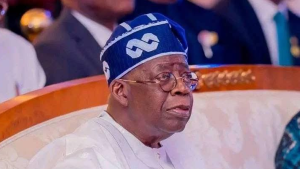
President Bola Ahmed Tinubu has urged local government chairmen across the country to prioritise fairness in appointments, transparency in administration and equity in the distribution of opportunities and resources.
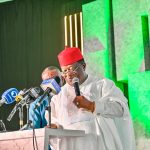
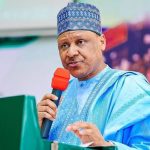
Tinubu gave the charge on Monday in Abuja while declaring open a workshop organised by the Federal Character Commission for local government chairmen.
The President, in a keynote address delivered on his behalf by the Secretary to the Government of the Federation, Senator George Akume, said inclusive governance at the grassroots was essential to strengthening public confidence in government and promoting national unity.
He urged the council chairmen to ensure that governance at the local level remained inclusive, representative and equitable, stressing that they had a major responsibility to translate the principles of fairness and Federal Character into practical governance.
“You, as Local Government Chairmen, carry the immense responsibility of ensuring that governance is inclusive, representative, and equitable. You must embody the principles of fairness in appointments, transparency in administration, and balance in the distribution of opportunities and resources,” Tinubu said.
The workshop, themed, “Translating Federal Character Principles into Local Governance: Bridging Policy and Practice,” focused on strengthening the implementation of the Federal Character principle at the grassroots.
Tinubu described Nigeria’s diversity as one of the country’s greatest assets, noting that its various cultures, ethnicities and beliefs must be managed through fairness, justice and inclusiveness.
He said the Federal Character principle, enshrined in Section 14(4) of the 1999 Constitution, provided an institutional and moral framework for ensuring that the diversity of Nigerians was reflected in government at all levels, particularly at the state and local government tiers.
According to him, applying the principle would promote a sense of belonging and loyalty among Nigerians, which he said was essential to the stability, unity and progress of the country.
The President also stressed the strategic role of local government councils as the closest tier of government to the people, saying decisions taken at that level had immediate effects on citizens’ daily lives.
He warned that laws and institutions alone could not guarantee the desired outcomes without visionary leadership, ethical conduct and deliberate commitment.
Tinubu therefore called on the chairmen to rise above sectional interests and adopt a broader national outlook that places unity above division and inclusiveness above exclusion.
He further linked inclusive governance to economic development, saying fair representation could strengthen social cohesion, reduce conflicts and create an environment conducive to economic growth and innovation.
“When every segment of society feels represented and valued, social cohesion is strengthened, conflicts are minimised, and the environment becomes conducive for economic growth and innovation,” he said.
The President commended the Federal Character Commission for recognising local governments as a critical component in the implementation of Federal Character principles.
He described the workshop as an opportunity for the council chairmen to deepen their understanding of the principles and develop practical strategies for embedding them in grassroots governance.
Tinubu urged participants to actively engage in the workshop and commit themselves to its ideals, stressing that the future of Nigeria’s democracy depended significantly on the strength, fairness and inclusiveness of local institutions.
He formally declared the workshop open and commended the Federal Character Commission for its commitment to promoting national integration.