

By Hosanna Eseose
More than 88 per cent of the world’s population can now read and write, representing significant progress in global literacy over the past decade, the United Nations Educational, Scientific and Cultural Organisation (UNESCO) has said.
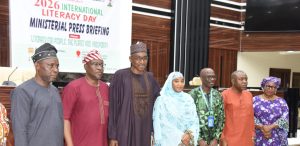
The Head of Education Sector at the UNESCO Abuja office, Mr. Oladeji Adeyemi, disclosed this on Friday in Abuja at a press briefing to commemorate the 2026 International Literacy Day, themed “Literacy for People, the Planet and Prosperity.”
Adeyemi said the global literacy rate had risen considerably from about 65 per cent a decade ago, although millions of people across the world still remained affected by illiteracy.
He reaffirmed UNESCO’s commitment to working with Nigeria and other member states to promote literacy and education as critical drivers of sustainable development.
According to him, the progress recorded globally demonstrates the impact of sustained investments and interventions in literacy, while the number of people still excluded from basic reading and writing underscores the need for renewed efforts.
Adeyemi cited Kano State as an example of how collaboration can advance mass education, noting that UNESCO-supported programmes in the state had expanded beyond basic reading, writing and numeracy.
He said the programmes now also incorporate health and well-being education through family-life initiatives, reflecting the broader role of literacy in improving people’s quality of life.
The UNESCO official’s remarks came as the Federal Government announced measures to strengthen adult and non-formal education in Nigeria, including plans to establish a National Centre for Adult Education and provide a permanent headquarters for the National Commission for Mass Literacy, Adult and Non-Formal Education (NMEC).
The Minister of State for Education, Prof. Suwaiba Ahmad, also announced the activation of community learning centres to provide flexible learning opportunities for young people and adults who were unable to access or complete formal education.
The minister said NMEC staff would serve as instructors at the centres, particularly in communities where access to formal education remained limited.
Meanwhile, the newly appointed Executive Secretary of NMEC, Prof. Dahiru Muhammad Shuni, disclosed that Nigeria currently lacked up-to-date data on its literacy rate, noting that available figures dated back to 2010.
Shuni described the situation as unacceptable, saying relevant authorities were working to obtain accurate and current data on the number of Nigerians affected by illiteracy.
Adeyemi stressed the importance of continued collaboration between UNESCO, the Nigerian government and other stakeholders to ensure that literacy remains accessible to all segments of society.