


By Prevail Inegbenose
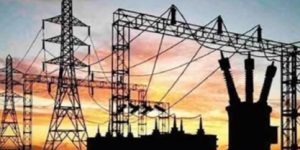
For more than two decades, Nigeria’s electricity sector has been largely driven by a centralised system in which the Federal Government, through its agencies and the national grid, has exercised dominant control over electricity generation, transmission and distribution.
Despite several reforms, the country has continued to struggle with inadequate generation, weak distribution networks, poor access to electricity and frequent power outages.
From the Electric Power Sector Reform Act of 2005 to the privatisation of generation and distribution assets in 2013, Nigeria’s power sector has moved through several important phases designed to improve efficiency, attract private investment and strengthen electricity delivery. However, the experience of the past two decades has demonstrated that solving the country’s electricity challenge requires more than simply expanding generation capacity.
In view of the above, the enactment of the Electricity Act 2023 marked a significant departure from this long-standing structure. Signed into law in June 2023, the Act repealed the Electric Power Sector Reform Act 2005 and introduced a framework designed to decentralise Nigeria’s electricity industry.
One of its most important features is the recognition of the role state governments can play in developing electricity markets within their territories. States can establish regulatory authorities, develop state electricity markets and facilitate generation and distribution projects that are essentially intra-state.
This represents an important opportunity for state governments and governors who are serious about industrialisation, job creation, investment and improving the quality of life of their citizens.
Four years after the enactment of the Electricity Act 2023, figures available as of the second quarter of 2026 indicate that 15 state governments in Nigeria have successfully obtained regulatory licences from the Nigerian Electricity Regulatory Commission (NERC) to regulate their own electricity markets. These State Electricity Regulators (SERs) are now responsible for driving local market growth, attracting investments and ensuring robust customer protection.
Kudos to those 15 state governments and their governors for taking the lead in keying into the Nigeria Electricity Act. Their decisions no doubt demonstrate an understanding of the Act and what their states stand to gain in the long run.
State governments and governors who are yet to transition to regulating their own electricity markets must understand that what the people expect from them is good governance, which includes effective electricity governance.
Instead of leaving electricity entirely in the hands of the Federal Government and the national grid system, which has over the years been characterised by epileptic power supply, states can now directly participate in the development and regulation of electricity within their jurisdictions.
This means that a state government can create a framework for its electricity market, establish a regulatory authority and create an enabling environment for private investors to develop power plants, mini-grids and other electricity projects capable of providing constant and reliable power to its citizens.
This will drive industrialisation, create jobs, bolster investment and, no doubt, improve the quality of life of the good people of the state. More importantly, the expansion of economic activities will broaden the state’s revenue base through increased taxes, business registrations, land-related revenues and other internally generated revenue streams.
Moreover, the Nigeria Electricity Act 2023 has given governors an opportunity to treat electricity as a key instrument of economic development. Stable electricity is fundamental to the economic development of any state. No modern economy can thrive sustainably without reliable electricity. From the smallest businesses to the largest enterprises and across virtually all sectors, economic activities depend heavily on electricity.
Rather than waiting anxiously and tirelessly for the Federal Government to improve the national grid, state governments and governors must take advantage of the Electricity Act 2023 to develop electricity systems that will drive economic growth in their respective states.
Inegbenose is a journalist, he writes from Abuja. Email: prevailinegbe@gmail.com