




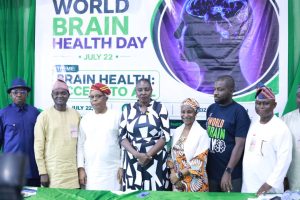
The Permanent Secretary of the Federal Ministry of Health and Social Welfare, Ms. Daju Kachollom, has raised concern over the growing burden of neurological disorders, revealing that they now affect more than 3.4 billion people globally and have become the leading cause of disability worldwide.
Kachollom disclosed this on Wednesday in Abuja during the commemoration of World Brain Day 2026, themed “Brain Health: Access for All.”
She said Nigeria is also witnessing a rising burden of neurological conditions, including stroke, epilepsy, dementia, Parkinson’s disease, traumatic brain injuries and neurodevelopmental disorders, many of which are worsened by mental health conditions such as depression and anxiety.
According to the Permanent Secretary, the Federal Government is responding by establishing a Brain Health Desk under the National Mental Health Programme and developing Nigeria’s first National Brain Health Agenda to improve the prevention, diagnosis, treatment and long-term management of neurological disorders.
She explained that the Brain Health Desk would strengthen national coordination on brain health by driving policy development, research, advocacy, partnerships, capacity building, surveillance and service delivery in collaboration with government agencies, teaching hospitals, professional bodies, academia, development partners, civil society organisations and the private sector.
Kachollom said the proposed National Brain Health Agenda would provide a strategic framework for improving governance, expanding access to quality neurological services, strengthening the health workforce, promoting research and innovation, and enhancing collaboration across sectors.
The framework, she added, will align with the World Health Organisation’s Intersectoral Global Action Plan on Epilepsy and Other Neurological Disorders (2022–2031) while addressing Nigeria’s specific needs.
She reaffirmed the Federal Government’s commitment to strengthening primary healthcare, improving access to quality health services, expanding the health workforce and advancing mental health services under the Renewed Hope Agenda and the Nigeria Health Sector Renewal Investment Initiative.
The Permanent Secretary also announced that World Brain Day would now be included in the Ministry’s annual national health commemorations calendar to sustain awareness and advocacy on brain health.
She called on healthcare professionals, development partners, civil society organisations, traditional and religious leaders, the media and other stakeholders to work together to reduce stigma, encourage early diagnosis and expand access to rehabilitation services, essential medicines and assistive technologies.
“Investing in brain health is not only a health imperative; it is an economic imperative.
By protecting brain health across the life course, we unlock human potential, strengthen productivity, foster innovation and lay the foundation for a thriving brain economy,” Kachollom said.
Earlier, the Director of Public Health, Dr. Charles Nzelu, described neurological disorders as one of the world’s greatest public health challenges, noting that stroke remains a leading cause of illness, death and long-term disability in Nigeria.
He said the World Brain Day commemoration provides an opportunity to strengthen partnerships and promote practical solutions to the country’s growing neurological disease burden.