
By Matthew Okon
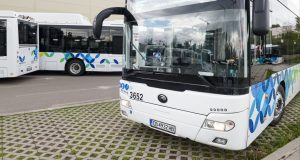
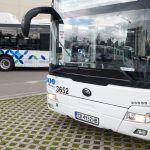
President Bola Tinubu has moved to reduce transportation costs across the country, following plans by Chinese automotive giant, Yutong, to establish a Compressed Natural Gas (CNG) bus assembly plant in Nigeria, alongside an initial supply of 300 buses.
The development was disclosed in a statement issued on Thursday, November 19, 2026, by the President’s Special Adviser on Information and Strategy, Bayo Onanuga, following an agreement signed in Lagos between Yutong and the Presidential Initiative on Compressed Natural Gas and Electric Vehicles (Pi-CNG & EV).
According to the statement, the investment is expected to support the National Affordable CNG Transit Programme (NACTP), which targets approximately 40 per cent reduction in transport fares on participating routes in collaboration with state governments.
Under the agreement, Yutong will supply an initial 300 CNG-powered buses, with the first 100 expected to arrive in Lagos by the end of December 2026.
The remaining buses will subsequently be assembled locally through YP Automobiles Bus Assembly at the former Leyland Automotive plant in Ibadan, Oyo State.
The arrangement is expected to revive local automotive manufacturing capacity, reduce dependence on imported vehicles and create employment opportunities for Nigerian engineers, technicians and other skilled workers.
Yutong, described as the world’s largest bus manufacturer, reportedly sold 49,518 buses globally in 2025 and has experience in manufacturing mass transit vehicles, including electric and CNG-powered buses.
President Tinubu welcomed the investment, describing it as part of his administration’s efforts to expand affordable mass transportation and reduce the financial burden of daily commuting on Nigerians.
He noted that millions of Nigerians depend on commercial transportation to commute to work, take their children to school, access markets and transport goods, adding that transportation costs consume a significant portion of many households’ daily earnings.
The President stressed that the lower operating costs associated with CNG-powered vehicles must translate into reduced fares for passengers, enabling workers, traders and families to save more money for other essential needs.
The statement also highlighted ongoing efforts to expand CNG refuelling infrastructure nationwide through Pi-CNG & EV, the Midstream and Downstream Gas Infrastructure Fund (MDGIF) and private sector investments.
These interventions include the deployment of Mobile Refuelling Units (MRUs) and a presidential directive for the provision of 1,000 additional CNG refuelling infrastructure units across the country.
Tinubu said the administration would continue working with state governments and transport operators to extend affordable CNG-powered transportation to more routes nationwide.
He added that establishing local assembly capacity would promote technology transfer, strengthen Nigeria’s automotive industry and ensure a sustainable supply of affordable commercial buses.
The President maintained that the ultimate measure of the CNG programme’s success would be the savings Nigerians make on transportation, assuring citizens of his administration’s commitment to reducing living costs through investments in infrastructure, manufacturing and mass transit.