


By Prevail Inegbenose
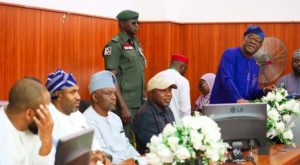
The Minister of the Federal Capital Territory (FCT), Nyesom Wike, has challenged youths in Abuja to assess government performance based on tangible achievements rather than political affiliations, social media narratives and campaign promises.
Wike gave the charge on Wednesday, November 11, 2026, during an interactive session with youth representatives in Abuja, where he highlighted the establishment of the FCT Youth Affairs and Women Affairs Secretariats as part of President Bola Tinubu’s efforts to address decades of institutional neglect.
The minister noted that since the creation of the FCT in 1976, successive administrations had failed to establish dedicated administrative structures to address the needs of youths and women.
He described the creation of the two secretariats as an institutional intervention designed to promote sustained engagement, empowerment and development.
Wike also urged young Nigerians to distinguish between political promises and concrete actions, insisting that public office holders should be judged by their records.
Defending the Federal Government’s economic reforms, particularly the removal of petrol subsidy, the minister said the decision had freed resources that could be redirected towards critical sectors of the economy.
He argued that subsidy removal had increased revenue allocations to state and local governments, providing them with additional resources to execute development projects.
He also cited what he described as improved stability in the university system, pointing to the absence of recurring nationwide industrial strikes in recent years.
The interactive session also provided an opportunity for FCT youth representatives to present proposals and demands covering education, scholarships, employment, skills acquisition, transportation and the protection of indigenous communities.
President of the FCT Youth Network, Comrade Isaac David, disclosed that youth organisations had developed an FCT Youth Development Policy in collaboration with international organisations, traditional institutions and other stakeholders.
He appealed to the minister to support the establishment of an FCT Education Trust Fund to mobilise additional resources for the education sector through corporate organisations and development partners.
David also called on FCT youths to support President Tinubu’s re-election bid in 2027 and demonstrate their political participation through their Permanent Voter Cards.
Similarly, youth leader Destiny Yamawo called for increased funding for the FCT Scholarship Board to expand access to scholarship opportunities, including overseas education.
He also advocated improved welfare for teachers under the Universal Basic Education programme to prevent industrial disputes capable of disrupting academic activities.
On the ongoing review of the FCT Master Plan, Yamawo urged the administration to protect the interests of indigenous communities and ensure adequate compensation where relocation becomes unavoidable.
President of the Indigenous Youths of the FCT, Hassan Aliyu, appealed to Wike to intervene in the approval of scholarship applications submitted by FCT indigenes, disclosing that the list of successful applicants had reportedly been forwarded to the minister’s office.
Aliyu also requested dedicated buses to enable students to participate in academic conferences, leadership programmes and other educational activities.
Meanwhile, Chairman of the FCT Youth Wing of the Christian Association of Nigeria, Apostle Peter Anyebe, commended the minister’s infrastructure and urban renewal projects.
The Muslim youth representative, Adam Ahmed, also praised Wike’s development projects in the Territory, referencing his record as former governor of Rivers State.
Abuja Times reports that the youth representatives expressed their readiness to collaborate with the FCT Administration to translate the proposals presented at the meeting into practical initiatives capable of improving opportunities and living conditions for young people across the six area councils.