

By Prevail Inegbenose

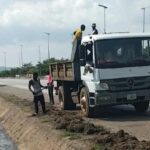
Residents and commuters along the Karu corridor of the Federal Capital Territory (FCT) have commended President Bola Ahmed Tinubu and FCT Minister Nyesom Wike following the completion of a 15-kilometre road project, saying the development has eased traffic congestion, reduced flooding and boosted business activities.
The project, executed by indigenous contractor Abdul-Val Nigeria Limited, also known as Abduval Limited, was awarded on August 22, 2025, and stretches from the Karu Interchange along the Abuja-Keffi Expressway to Customs Clinic Junction.
It also covers several feeder roads, including DSS Road, NIA Road, EFCC Road, Primus Hospital Road and Old CBN Quarters Road.
For years, residents and motorists along the corridor had faced severe traffic congestion, poor drainage and flooding, particularly during the rainy season.
However, residents who spoke after the completion of the project said the situation had improved significantly.
According to Daily Post, a shop owner, Mrs Chinyere Obasi, said the improved road had positively affected businesses in the area.
“Before, the road wasn’t all that good. And there was nothing like the street lights. But now, as you can see, the road is okay. And our businesses, by the grace of God, is even better than before,” she said.
According to her, the improved road had also made movement easier.
“So we are happy that the road is good,” she said, attributing the project to President Tinubu, the FCT Minister, Nyesom Wike, and the contractor.
“I just pray that God will bless them, that they will continue the good work.”
Also speaking, a teacher, Anita Ogunwunmi, said the project had brought significant relief to commuters who previously spent considerable time navigating the route.
“Before, the congestion on the road was so bad. When rain falls like this, we can’t pass here, but now, everywhere is free. It’s better. We are happy,” she said.
Ogunwunmi said the improved road had changed her daily routine, allowing her to leave home later without fear of being trapped in traffic.
“The route is faster. Before, I used to leave very early to come to work, but now I can leave much later. There’s no hold-up, there’s no traffic. It’s free. The road is free, it’s better,” she said.
She described the project as a major relief and commended the FCT Minister for the development.
A motorist and engineer, Johnpaul Adamu, recalled the difficult conditions residents and motorists faced before the project was executed.
“Well, this road has been a major challenge in Karu. If you can remember, 12 months ago, this place was not like this,” Adamu said.
He said poor drainage, flooding and traffic congestion had previously made the corridor difficult to navigate.
But Adamu said the transformation had been remarkable.
“Now, wow, this is, let me say, this is city now. We are happy. The infrastructure is working, there’s streetlights. If you come here by 12 midnight, you’ll think this is afternoon. We thank God for everything,” he said.
The motorist also praised Wike’s performance in the FCT, saying the minister had made a visible impact through infrastructure development.
“For me in particular, I will say, let it be 4+4 for him, because he has done well,” Adamu said.
“In fact, this is the first minister that I’ve seen that has worked, that has provided infrastructure, water, dams, housing everywhere. Everything is going well. We give God the glory.”
He added: “For me, he’s the best minister I’ve ever seen, FCT Minister in particular.”
Meanwhile, the Project Manager of Abdul-Val Nigeria Limited, Hacı Cengiz, said the completion of the project demonstrated the capacity of indigenous contractors to execute major infrastructure projects.
Cengiz commended the FCT administration for supporting indigenous companies.
“We are not a foreign company, but thank God we are doing well, and the minister is supporting indigenous companies very well. Thank you, Minister,” he said.
He said the Karu project was the second major project completed by the company, following the completion of the Ushafa road project.
“This is the second project we are going 100 per cent we finished. Before in Ushafa, now this Karu project completely finished, 100 per cent completed,” he said.
“For example, in Ushafa, it was 18 months, but we completed seven months, 100 per cent. Now we come here, the same thing in Karu. About 15 kilometres in Karu also, dualisation of the road. And 100 per cent we completed. That is why the minister, Mr Wike, commissioned the project.”
He added that the company’s management ensured the availability of materials and equipment required to deliver the projects.
The project, he disclosed, had also created employment opportunities for members of the host communities.
“Up till now, about 259 workers are working. Especially, the majority are from the community. Where we are working, we are employing from the community,” he said.
Cengiz said the economic benefits extended beyond direct employment, as workers also patronised businesses within the communities where they worked.
He further stressed the importance of supporting indigenous contractors, arguing that their continued presence in Nigeria would help preserve technical expertise and investments.
“It is an indigenous company. Our MD is supporting very well, and especially the minister. I want to say: ‘Thank you, Minister,’ because he is supporting the indigenous company,” he said.
“Foreign companies, when they come and do the work, later on after two, four, five years, they go. But indigenous company, and the experience, knowledge, data, everything stay in here.”
“And you see our equipment, this is the big investment for Nigeria.”
For residents, the transformation of the Karu corridor represents more than a new road, with shorter commuting time, improved business prospects, better drainage and easier movement through one of the busiest gateways into Abuja.