
By Prevail Inegbenose
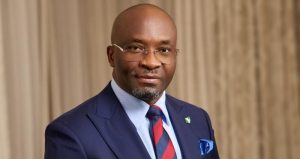
Deputy Speaker of the House of Representatives, Rt. Hon. Benjamin Okezie Kalu, has urged global investors to take advantage of emerging opportunities in Nigeria’s green economy, describing the country’s climate transition as a gateway to sustainable growth, job creation and long-term economic resilience.
Kalu made the call while delivering the keynote address at the Nigeria Climate Investment Summit, a flagship event of London Climate Action Week themed, “Catalyzing Nigeria’s Climate Policy Progress into Financial Flows for Green Projects,” held in London, United Kingdom.
Addressing international investors, development partners and financial institutions, the Deputy Speaker said Nigeria was ready to translate its climate policies into bankable projects, citing opportunities across renewable energy, agriculture, transportation and climate adaptation infrastructure.
According to him, investment opportunities abound in distributed renewable energy, solar mini-grids, battery storage, clean cooking solutions, electricity transmission and distribution infrastructure, as well as industrial energy efficiency projects.
He also identified climate-smart agriculture, irrigation systems, cold-chain logistics, food processing and resilient rural infrastructure as critical sectors capable of boosting food security and improving livelihoods.
Kalu further highlighted electric mobility, mass transit systems, low-carbon urban transportation, waste-to-value projects, methane reduction initiatives, circular economy enterprises and green manufacturing as areas with strong investment potential.
He stressed that climate adaptation remains a priority for Nigeria, pointing to opportunities in flood-control systems, resilient drainage infrastructure, coastal protection projects, nature-based solutions and climate-resilient housing.
The Deputy Speaker noted that Nigeria’s climate challenges extend beyond emissions reduction to include adaptation measures aimed at protecting communities from the effects of extreme weather, flooding, land degradation, food insecurity and climate-induced displacement.
“Our message is simple: Nigeria’s green transition must be a just transition. It must expand access to affordable energy, create decent work, support communities, equip young people with new skills, promote women’s participation in the green economy and ensure that no region or social group is left behind,” he said.
Kalu linked climate investment prospects to ongoing economic reforms under President Bola Ahmed Tinubu’s administration, saying measures such as the removal of fuel subsidy and foreign exchange market reforms had strengthened investor confidence.
According to him, the subsidy removal has freed up resources for infrastructure development and contributed to a significant increase in government revenue, while the unification of the foreign exchange market has improved liquidity and reduced arbitrage.
He assured investors that Nigeria’s legal and regulatory framework provides adequate protection for investments, citing the Climate Change Act and the Electricity Act as key legislative instruments supporting climate finance and green development.
Kalu explained that the Climate Change Act establishes frameworks for climate governance, carbon budgeting, emissions reporting and market-based climate mechanisms, while the Electricity Act promotes decentralisation and expands opportunities for private-sector participation in the power sector.
He added that the legislation has positioned states, including Lagos, to become hubs for green investment through project development, transparent procurement processes and partnerships with private capital.
The Deputy Speaker also reaffirmed the commitment of the 10th National Assembly to strengthening implementation of climate laws, enhancing investor protection, supporting carbon markets and green finance initiatives, and streamlining approvals for environmentally sustainable projects.
Calling for deeper international collaboration, Kalu invited investors, pension funds, insurers, banks, development finance institutions and philanthropic organisations to partner with Nigerian institutions in developing innovative financing structures for climate projects.
He advocated blended-finance models, green guarantees, first-loss facilities, political risk insurance, local-currency financing and project preparation support to reduce investment risks and lower capital costs.
To ensure concrete outcomes from the summit, Kalu proposed the establishment of a Nigeria–London Green Finance Partnership aimed at developing an investor-ready pipeline of projects in clean energy, transportation, agriculture, resilient infrastructure and the circular economy.
He said the partnership would also support project preparation and transaction facilitation to move viable initiatives from concept stage to implementation.
“Nigeria is ready to work with global partners to ensure that every pound sterling, dollar, euro or naira invested in the country’s green economy delivers measurable value, creates jobs, strengthens resilience and promotes shared prosperity,” he said.