

By Becky Momodu
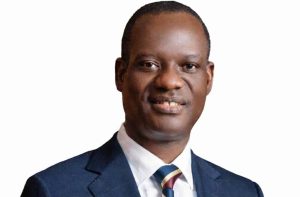
The Minister of Finance and Coordinating Minister of the Economy, Mr. Taiwo Oyedele, has dismissed claims that the Federal Government spent more than ₦8 trillion outside the approved budget, describing the allegations as incorrect and capable of misleading the public.
In a statement issued on Sunday, the minister said the Federal Government does not operate a “shadow budget” or expend public funds outside the constitutional and statutory framework governing public finance in Nigeria.
Oyedele was reacting to recent public commentary which cited the International Monetary Fund (IMF) Representative in Nigeria and the Fund’s 2026 Article IV Consultation Report to allege that about two per cent of the country’s Gross Domestic Product (GDP), estimated at over ₦8 trillion, was spent outside the approved budget.
According to the minister, all public expenditure is undertaken in line with Sections 80–83 and 162 of the Constitution and is backed by Appropriation Acts, Supplementary Appropriation Acts or other statutory authorities approved by the National Assembly.
He explained that multi-year capital projects, statutory transfers, first-line charges, debt service obligations, capital budgets for some agencies and the Federal Capital Territory, as well as special interventions for security, infrastructure and emergency response, are all authorised by law and should not be interpreted as unlawful or secret spending.
The minister stressed that these expenditures are disclosed in fiscal reports and remain subject to oversight, audit and accountability mechanisms, noting that differences in their presentation under international reporting standards should not be misconstrued as evidence of expenditure outside the budget.
Oyedele also rejected suggestions that the reported amount represented an increase in the country’s fiscal deficit, explaining that a fiscal deficit is determined by the relationship between total government revenue and expenditure, rather than the financing mechanism for approved projects.
He said the IMF’s observations were primarily focused on improving the comprehensiveness, timing and presentation of Nigeria’s fiscal reporting and not the legality of government spending.
The minister recalled that President Bola Ahmed Tinubu had, during the presentation of the 2026 Appropriation Bill, urged the National Assembly to end the practice of multiple and overlapping budgets in favour of a single, harmonised budget framework.
Reaffirming the government’s commitment to prudent fiscal management, transparency and accountability, Oyedele said ongoing reforms have strengthened budget credibility, treasury management, revenue administration and the digitalisation of government financial processes.
He urged Nigerians to base public discourse on verifiable facts and a proper understanding of the country’s constitutional and fiscal framework, adding that the Federal Government would continue to strengthen fiscal governance in line with international best practices.