

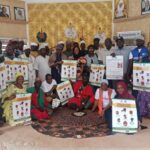



The Federal Government has officially flagged off the distribution of medical equipment for Comprehensive Emergency Obstetric and Newborn Care (CEmONC) health facilities to states across Nigeria as part of efforts to reduce maternal and newborn deaths in the country.
Speaking at the ceremony, the Coordinating Minister of Health and Social Welfare, Professor Muhammad Ali Pate, described the intervention as a major milestone in the ongoing healthcare renewal agenda of the Federal Government.
According to him, the initiative is aimed at ensuring that every Nigerian mother has the opportunity to give birth safely while every newborn has a chance to survive and live a healthy life.
Represented by Dr. Muyi Aina, Executive Director, National Primary Healthcare Development Agency (NPHCDA), Pate commended the national coordination office and development partners for their commitment and support towards strengthening Nigeria’s healthcare system.
“This moment is historic. Six months ago, we gathered to flag off the distribution of equipment and commodities to primary healthcare centres at the National Primary Health Care Development Agency. Today, we are taking another bold step by focusing on the secondary healthcare level,” he said.
The minister disclosed that the intervention had already started producing positive results, revealing that more than 40,000 women had accessed timely life-saving interventions in facilities benefiting from the programme.
“These are not just numbers. These are our mothers and heroes who have been given a second chance at life,” he stated.
Pate explained that the reforms were part of broader commitments made by the Federal Government and development partners under the Sector-Wide Approach (SWAp) aimed at improving healthcare delivery and reducing the financial and physical burden of healthcare on Nigerians.
He noted that stakeholders from the Federal Government, state governments, the Nigeria Governors’ Forum, commissioners for health, hospital management boards, local governments and development partners were all working together under what he described as a “quadruple compact” to improve health outcomes nationwide.
According to him, equipment worth nearly $200,000 is being provided to states, while almost 200 additional healthcare facilities across 30 states would benefit from the intervention.
“This is proof that when we combine resources, align priorities and move in one direction, we can achieve results across the nation,” he said.
The minister added that the deployment of resources marked one of the first times such investments were being made at scale to improve the quality of healthcare services in Nigeria.
He, however, stressed that equipment alone would not solve the challenges in the sector, calling on state governments to invest more in the rehabilitation and staffing of secondary healthcare facilities.
“We need to ensure that these facilities are not just equipped, but fully functional. Secondary healthcare facilities remain critical referral centres as we continue strengthening primary healthcare services across the country,” Pate added.