





Nigeria is charting a path away from economic fragility toward sustained growth, as sweeping reforms introduced under President Bola Tinubu begin to stabilise the economy despite mounting global pressures.
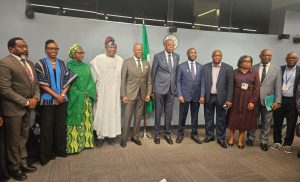
The Minister of Finance and Coordinating Minister of the Economy, Wale Edun, disclosed this during a press briefing at the Spring Meetings of the World Bank and International Monetary Fund in Washington, D.C.
Edun explained that the administration’s policy direction, introduced since mid-2023, is focused on long-term structural adjustments rather than short-term fixes. According to him, the reforms are designed to build a resilient economic framework capable of withstanding external shocks.
He noted that the global economic climate remains volatile, with trade disruptions, export tensions and tightening financial conditions affecting many economies. Against this backdrop, Nigeria’s strategy centres on disciplined macroeconomic management to ensure stability and inclusive growth.
Key measures such as the transition to a market-driven foreign exchange system and the removal of fuel subsidies, he said, are already correcting longstanding distortions while strengthening the country’s shock-absorption capacity.
On inflation, the minister acknowledged continued pressure driven by energy costs, food prices and logistics challenges, but assured that targeted social interventions and agricultural support programmes are being deployed to ease the burden on citizens.
Edun emphasised that fiscal discipline remains a cornerstone of the reform agenda, highlighting a shift away from inefficient subsidy regimes toward prudent resource management.
Providing updates on economic performance, he said Nigeria’s growth rate has surpassed four per cent, foreign reserves have climbed to about 50 billion dollars and inflation is gradually moderating. Public debt, he added, remains within sustainable levels.
He further stated that the reforms are boosting domestic production and restoring investor confidence. Major projects such as the Dangote Refinery were cited as evidence of renewed private sector optimism, alongside increased support for small and medium-sized enterprises.
According to Edun, Nigeria is transitioning from a stabilisation phase to accelerated growth, with key sectors including power, agriculture, infrastructure and digital innovation expected to drive job creation and expansion.
He also revealed that development partners reaffirmed their backing for Nigeria’s reform agenda during the meetings, while investor interest continues to rise across critical sectors such as energy, agribusiness and infrastructure.
In addition, Nigeria is advocating for global financial reforms to lower borrowing costs for developing nations, a major barrier to growth.
The Governor of the Central Bank of Nigeria, Olayemi Cardoso, echoed similar sentiments, stressing the importance of policy consistency in sustaining macroeconomic stability and investor confidence.
Cardoso noted that despite global economic headwinds, Nigeria has improved exchange rate stability and strengthened its external reserves, helping to cushion external shocks.
He also highlighted progress in the banking sector, revealing that the ongoing recapitalisation exercise has attracted about 4.65 trillion naira in new capital. As of March 31, 33 banks had met the revised capital requirements, enhancing the resilience of the financial system.
The CBN governor expressed confidence that continued adherence to reform policies will deepen economic stability, sustain growth and attract further investment into the country.