



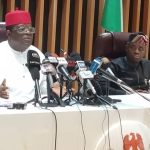

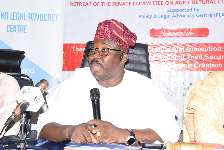
Chairman of the Senate Committee on Agricultural Colleges and Institutions, Sharafadeen Abiodun Alli, has unveiled a sweeping reform agenda aimed at transforming Nigeria’s agricultural colleges into innovation-driven hubs capable of tackling food insecurity and youth unemployment.
Speaking at the 2026 Strategic Retreat of the Committee and Heads of Agricultural Colleges and Institutions (ACIs) in Abuja, the lawmaker declared that the era of treating agricultural education as routine academic training must end.
The four-day retreat, held shortly after the conclusion of the 2026 budget defence at the National Assembly, focused on repositioning agricultural institutions as engines of productivity and economic growth.
Alli described many of the colleges as constrained by outdated operational models and chronic underfunding, warning that Nigeria’s food security ambitions cannot be achieved if institutions remain centres of theoretical learning.
“We convene at a critical juncture in our nation’s economic trajectory,” he said, stressing that agricultural colleges must evolve into “epicentres of innovation and engines of productivity.”
Under the retreat’s theme, Fostering Collaboration and Innovation: Re-Engineering ACIs’ Capacity for National Food Security and Sustainable Job Creation, the senator outlined a three-point reform blueprint.
First, he called for modernised research systems that prioritise commercially viable, field-ready solutions over academic papers that remain unused.
Second, he advocated for deeper technological integration, including precision agriculture, artificial intelligence and data analytics to combat climate change and declining yields.
Third, he emphasised infrastructure upgrades to align laboratories and demonstration farms with global agribusiness standards.
With rising food prices and climate-related disruptions affecting output, Alli described youth unemployment as a “ticking time bomb,” arguing that agricultural institutions must produce job creators rather than job seekers.
“Our aspiration is to forge a sustainable pipeline where graduates establish enterprises that create jobs rather than queue for government employment,” he said.
He noted that achieving this goal would require curriculum redesign, incubation support, and stronger collaboration between academia and commercial agriculture operators.
Acknowledging funding limitations, the lawmaker urged stakeholders to explore Public-Private-Academic partnerships, improve access to international climate-resilience grants, and intensify legislative advocacy to reposition agricultural education as a strategic investment.
Alli revealed that outcomes from the retreat will feed into a National Agricultural Education Summit later this year, where a legislative roadmap will be adopted.
He commended Senate President Godswill Obot Akpabio for his leadership and also acknowledged support from the Policy and Legal Advocacy Centre and the United Kingdom International Development for facilitating the retreat.
As Nigeria grapples with food inflation and economic headwinds, the Senate Committee’s push signals a potential shift in policy direction — one that seeks to place agricultural education at the centre of national economic strategy.
Whether the reform blueprint translates into increased funding, stronger institutional discipline and measurable productivity gains remains to be seen.