
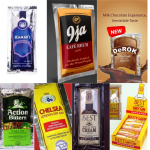




The Federal Government on Tuesday has flagged off a joint nationwide campaign to enforce the ban on sachet alcoholic drinks and small-sized alcohol bottles, beginning from Abuja.
The campaign, unveiled at the headquarters of the National Orientation Agency (NOA) on March 3, 2026, is being implemented in collaboration with the National Agency for Food and Drug Administration and Control (NAFDAC) and the Federal Competition and Consumer Protection Commission (FCCPC).
Addressing journalists, the Director-General of NOA, Mallam Lanre Issa-Onilu described the initiative as more than a routine policy rollout, calling it “a united stand for the health, safety and protection of Nigerian consumers.”
He announced that the Federal Government, through NAFDAC, has banned the production and sale of alcohol in sachets as well as alcohol packaged in PET or glass bottles below 200 millilitres, effective January 1, 2026.
The measure, he said, is a deliberate public health intervention aimed at curbing underage access to cheap, high-concentration alcohol and addressing rising cases of harmful consumption across communities.
“For too long, sachet alcohol has been dangerously accessible. It is inexpensive, portable and easy to conceal. When affordability meets vulnerability, the consequences are profound,” he stated.
According to him, the joint campaign aligns regulation, consumer protection and public enlightenment to ensure compliance and behavioural change nationwide.
He said NOA would deploy its structure of 818 offices across the 774 local government areas to take the sensitisation drive to rural communities, markets, motor parks, youth groups, schools and faith-based organisations in local languages.
The agency will also leverage television, radio, digital platforms and its CLHEEAN App to enable citizens report violations.
Speaking at the briefing, NAFDAC Director-General, Prof. Mojisola Adeyeye, said enforcement followed years of consultations, moratoriums and disturbing survey findings on alcohol consumption among minors.
“We are here to ensure that the ban on sachet alcohol and alcohol in small bottles less than 200ml is enforced across all age groups in Nigeria.
“The availability and easy access to alcohol have been identified as contributory factors to increasing alcohol consumption among minors,” she said.
Adeyeye disclosed that discussions around regulating high-concentration alcohol in sachets date back to 2018, when industry groups, including the Distillers and Blenders Association of Nigeria and the Association of Food, Beverage and Tobacco Employees, raised concerns about the impact on their businesses.
She explained that alcohol content in sachets was as high as 50 per cent compared to beer, which averages between six and eight per cent, making it significantly more potent and easier to abuse.
According to her, the former Minister of Health, Isaac Adewole, granted a five-year moratorium in 2019 to allow affected companies restructure their operations.
The moratorium expired in February 2024, prompting NAFDAC to begin enforcement in line with its statutory mandate.
However, resistance from industry players led to further delays after the matter was taken to the National Assembly. An additional one-year extension was later granted in December 2024 by the current Minister of Health, Muhammad Ali Pate, before the Senate directed the agency to resume strict enforcement.
Also FCCPC’s Representative, Director of Corporate Affairs, Ondaje Ijagwu, warned that violators would face severe sanctions in line with the commission’s mandate.
The NOA Director-General emphasised that the campaign is not about restriction for its own sake but about protecting children and vulnerable populations, reinforcing responsible consumption standards and strengthening community stability.
“No nation prospers when its youth are caught in cycles of preventable addiction. Protecting our children today is an investment in Nigeria’s stability and productivity tomorrow,” he said.
The agencies called on parents, community leaders, retailers and distributors to ensure full compliance, urging citizens to refuse patronage of banned products and support enforcement efforts nationwide.