



Nigeria has called for the full integration of its diaspora health professionals into national and global health strategies, describing them as a vital resource for strengthening the country’s healthcare system.
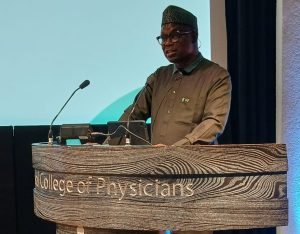
The Minister of State for Health and Social Welfare, Iziaq Adekunle Salako, made the call while delivering a keynote address at the 2026 United Kingdom Global Health Summit held at the Royal College of Physicians.
This was contained in a statement on Tuesday, by Ado Barko, Assistant Director of Information and Public Relations.
Salako noted that Nigerian health professionals abroad, estimated at over 150,000 globally, represent a vast pool of skills, knowledge, networks and capital that could significantly accelerate health system development.
He urged host countries, international organisations and diaspora groups to formalise and expand ongoing engagement programmes.
The minister also called for a renewed global commitment to health research and innovation driven by equity, stressing that low- and middle-income countries must be better represented in setting research priorities and contributing intellectual input.
Addressing the challenge of health worker migration, Salako advocated a “managed migration agreement” with clear performance indicators, noting that the current system—where developing countries train health workers who later migrate—was unsustainable and unjust.
He proposed bilateral and multilateral arrangements that would include compensation for source countries, joint training initiatives, and structured return pathways for professionals.
The Minister emphasised that global cooperation remains essential in tackling health workforce shortages, adding that no country can address the crisis in isolation.
Speaking on domestic efforts, Salako said Nigeria, under President Bola Ahmed Tinubu, has adopted a multi-pronged approach to improve both the quantity and quality of its health workforce.
He disclosed that medical school admissions increased by about 160 per cent between 2023 and 2025, with similar growth recorded in the training of nurses, pharmacists and other health professionals.
Salako added that the government is strengthening paramedical training institutions and implementing task-shifting strategies in line with recommendations by the World Health Organization to optimise healthcare delivery.
On financing, the minister reaffirmed Nigeria’s commitment to the Abuja Declaration target of allocating 15 per cent of national budgets to health.
He called on international partners to support domestic efforts through flexible funding and innovative financing mechanisms such as health bonds, blended finance and public-private partnerships.
Salako acknowledged that Nigeria’s health system continues to face challenges, including underfunding, infrastructure gaps, high out-of-pocket costs and rural-urban disparities, amid broader global pressures.
He concluded by urging collective action, stating that building a resilient global health system requires courage, collaboration and a shared commitment to valuing every life equally.