



By Becky Momodu
The Niger Delta Power Holding Company (NDPHC) has recovered 110 abandoned containers and 216 packages within the first 100 days of the current administration, saving the company more than N30 billion.
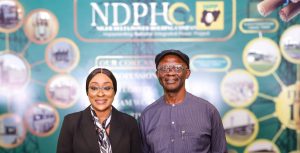
The Managing Director and Chief Executive Officer of NDPHC, Engr. Jennifer Adighije, disclosed this on Wednesday in Abuja during an oversight visit to the company’s headquarters by the House of Representatives Committee on Power, chaired by Hon. Victor Nwokolo.
Adighije said the recovery was among several achievements recorded by the company under her administration, alongside debt recovery, digitalisation, improved procurement practices, asset restoration and the completion of distribution projects.
She disclosed that NDPHC had recovered about $12 million from cross-border bilateral customers in Togo and other debtors, out of an outstanding debt exceeding $50 million.
According to her, the company had also recovered several turbines across its power plants, adding about 470 megawatts (MW) to the national grid.
However, Adighije identified transmission constraints, low electricity tariffs, inadequate market settlements, gas supply challenges, unpaid debts and vandalism as major obstacles affecting NDPHC’s operations.
She said NDPHC currently had more than 1,500MW of mechanically available generation capacity but was allocated an hourly dispatch of only about 500MW, leaving a significant portion of its generation capacity suppressed or stranded.
The NDPHC boss estimated that the suppressed and stranded capacity had cost the company more than N300 billion, calling for regulatory intervention to review the existing dispatch merit order.
Adighije also appealed to the House Committee on Power to intervene in outstanding debts owed NDPHC by electricity market participants, including the Nigerian Bulk Electricity Trading Plc (NBET), which she said had accumulated liabilities of more than N400 billion.
She further sought the settlement of obligations arising from NDPHC assets recognised in the regulated asset base of the Transmission Company of Nigeria (TCN).
Responding to the presentation, Nwokolo commended NDPHC management for its efforts to improve electricity generation, describing the company’s operations as critical to the entire power value chain.
“We have also been to their power stations. And, honestly, they are taking some reasonable, very reasonable actions towards making Nigeria’s access [to] electricity,” he said.
The committee chairman stressed that the success of Nigeria’s electricity sector depended on the effective performance of the generation, transmission and distribution segments.
“If they don’t generate, there’s nothing to transmit. If they don’t transmit, there’s nothing for me to distribute. So I must commend them,” Nwokolo said.
He also commended Adighije for what he described as her proactive approach to managing NDPHC and addressing challenges confronting its power plants.
Nwokolo cited the Alaoji power plant as an example of a facility that could have suffered a worse fate without timely intervention by the current NDPHC management.
He assured the company that the legislature would provide support where necessary, stressing that NDPHC could not independently resolve all the challenges confronting Nigeria’s power sector.
The committee chairman said the concerns raised by NDPHC would be examined, with the committee working with relevant stakeholders to seek practical solutions.
He explained that the oversight visit was aimed at understanding the challenges facing NDPHC and supporting the company in finding solutions, rather than creating an adversarial relationship between lawmakers and the agency.
Nwokolo further commended NDPHC for welcoming legislative oversight, noting that such engagements provided an opportunity for government agencies to demonstrate their achievements, explain challenges affecting their operations and receive the necessary support from the legislature.