

By Beryl Odele
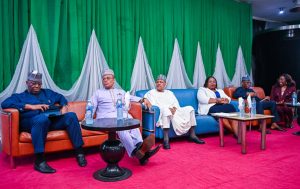
Stakeholders and key players in the broadcasting ecosystem, under the supervision of the Federal Ministry of Information and National Orientation, convened in Abuja to deliberate on the way forward for the much anticipated Digital Switch Over (DSO) project in Nigeria.
A Communique issued by the Rapporteur Team said the meeting was held on Tuesday 16th June, 2026 at Nicon Luxury Hotel, and chaired by the Minister of Information and National Orientation, Alhaji Mohamed Idris.
According to the Communique, the stakeholders meeting on the DSO roll out in Nigeria was at the instance of the National Broadcasting Commission (NBC) under the guidance of the Federal Ministry of Information and National Orientation.
The meeting brought together key players in the broadcasting ecosystem, including regulators, broadcasters, signal distributors, set-top box manufacturers, content producers, satellite operator, and industry associations, to deliberate on the way forward and ensuring the success of the project.
Addressing the stakeholders, the Minister assured that all decisions would be guided by national interest, stakeholder inclusion and the long-term sustainability of the broadcasting industry.
He urged stakeholders to approach the discussions constructively, emphasizing that while differing opinions may exist regarding implementation approaches, there was broad agreement among stakeholders on the need to complete Nigeria’s digital migration.
The Communique state that after discussions, stakeholders generally agreed among other things that:
“The transition should prioritize national interest and industry sustainability; local content development and local manufacturing should remain central objectives to the DSO implementation; regulatory certainty and investor confidence must be preserved; the DSO Roll Out should create jobs, attract investment and expand opportunities for Nigerian broadcasters and content creators”.
They also resolved that the Digital Terrestrial Television (DTT) remains an integral component of the DSO framework and should not be discontinued.
The stakeholders emphasized the importance of adopting a hybrid digital broadcasting model that leverages DTT, Direct-to-Home (DTH) satellite services and digital application-based delivery platforms.
Another key resolution during the meeting was the need to promote local content production, local manufacturing and job creation as key objectives of the DSO program.
To advance the implementation of the DSO program, it recommended among other things that the Federal Government through the Federal Ministry of Information and National Orientation, will reconstitute the DigiTeam Stakeholder platform to provide a structured mechanism for consultation, collaboration and industry participation; and that stakeholders will continue to collaborate with government agencies to ensure that the DSO program delivers improved broadcasting services, expanded audience reach, enhanced revenue opportunities as well as greater value for Nigerian consumers.
The meeting had in attendance 128 participants including the Director-General (DG) NBC, Mr Charles Ebuebu, the Permanent Secretary, FMINO, Dr. B Ukaire, DG NTA, Abdulhameed Dambos, DG, Advertising Regulatory Council of Nigeria (ARCON), Dr. Olalekan Fadolapo, Chairman, BON, Senior High Chief, Tony Akiotu, MD/CEO NIGCOMSAT Ltd, Mrs Jane Egerton-Idehen, Chairman, Channels Television, Mr. John Momoh as well as representatives of licensed broadcasters, signal distributors, set-top box manufacturers, content producers and DigiTeam, Nigeria and other industry stakeholders.